
Watch a toddler at a farmers’ market and you’ll see learning in its rawest form. They press their thumb into a peach, hold a lemon to their nose, tip their head towards the sound of a barrow rattling over cobbles. Long before children can explain what they know, their senses are gathering the evidence. Touch, taste, smell, sound and sight are the tools every child uses to build a picture of how the world works.
If you want to support that process at home, it helps to know what good sensory learning actually looks like. Use the checklist below as a practical guide.
Look for hands-on exploration, not just watching
Children learn far more by doing than by observing. A child who is allowed to squish dough, sort buttons or pour water between jugs is running small experiments about texture, weight and volume. When you’re choosing toys or activities, favour the ones that invite handling over the ones that simply light up and make noise. The messier options often teach the most.
Notice how they respond to sound
Sound shapes early language and emotion in ways that are easy to overlook. Pay attention to whether your child turns towards music, mimics animal noises or enjoys the rhythm of a story read aloud. These responses are the foundations of listening and speech. Reading together, singing in the car and simply naming the sounds on a walk all strengthen the link between what children hear and what they understand.
Watch for the questions that follow a smell or taste
Smell and taste are tied tightly to memory. A child who asks why bread smells different when it’s toasting, or why lemons make their face scrunch, is doing genuine scientific thinking. Cooking together is one of the richest sensory activities available at home, and it costs nothing extra beyond the meal you were making anyway. Let children sniff the herbs and taste as they go.
Check that quiet, focused play is possible
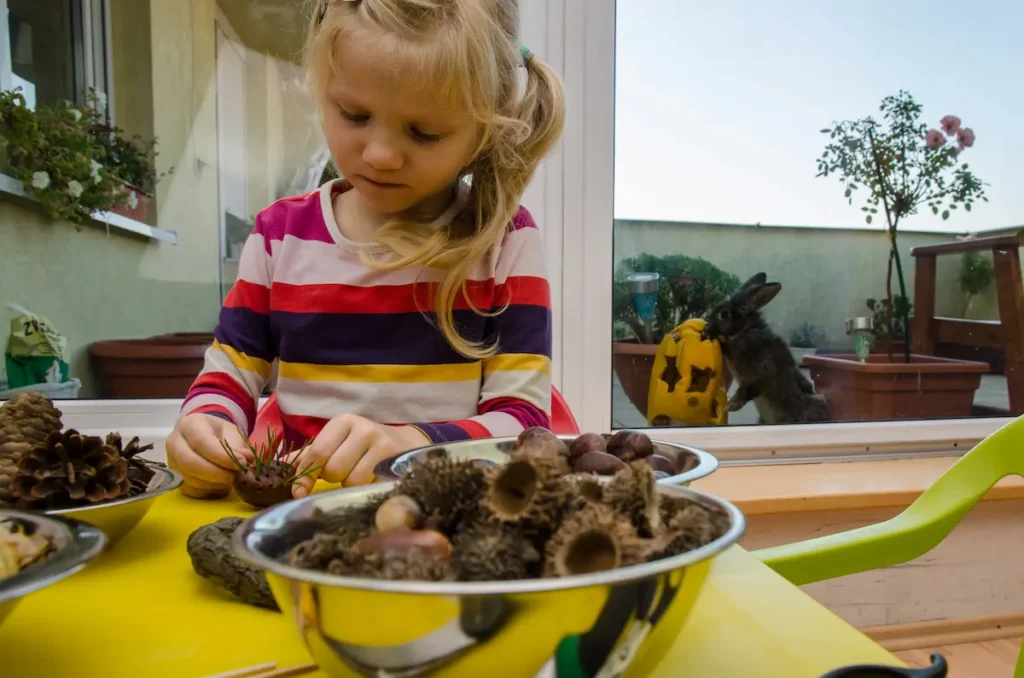
Constant stimulation can overwhelm the senses rather than sharpen them. Children need calmer moments to process what they’ve taken in. A quiet corner with a few natural objects, some pinecones, shells or smooth stones, gives them the space to look closely and notice detail. This kind of focused attention is a skill in its own right, and it’s one that many forward-thinking educational settings such as an independent school that values curiosity from the earliest years work hard to protect.
See whether the senses are being used together
Real understanding rarely comes from one sense alone. When a child bakes, they feel the dough, smell it change, hear the timer and see the colour deepen. Activities that combine several senses at once help children make connections and remember what they’ve learned. Trips to the woods, the beach or even a busy kitchen offer this naturally.
A simple test for any activity
When you’re weighing up how a game, outing or toy might help, ask three quick things. Does it invite the child to touch or move something themselves? Does it give them something to notice and talk about afterwards? And does it allow a moment of calm to absorb it all? If the answer is yes, the senses are doing their job.
Children don’t need elaborate equipment to learn this way. They need time, a little encouragement and adults who are happy to slow down alongside them. The world is already full of things worth touching, tasting and listening to. The best thing any parent can do is notice out loud, and let curiosity lead.
For families interested in how a rich, sensory approach carries through into later education, more information is available at https://rgsg.co.uk.
*This article was contributed by the team at RGS Guildford, an independent school in Surrey with a long history of nurturing curious, confident young people from the early years upwards. RGS Guildford believes learning begins with wonder, and that the habits of close attention and hands-on exploration formed in childhood shape thoughtful adults.*