

Disclosure: This post may contain opportunities for me to earn compensation. If you click and make a purchase, I may earn a small commission at no extra cost to you.
Keeping kids active when they’re little is fairly easy.
They run around the playground. Ride scooters. Climb things they probably shouldn’t. And generally seem incapable of sitting still for very long.
Then they become teenagers.
Suddenly there’s a lot more sitting around. Phones. Gaming. YouTube. And asking them if they fancy going for a walk isn’t always met with quite the enthusiasm you’d hope for!
Both my boys play sport, but I’ve still noticed a big difference as they’ve got older. They’re not naturally running around all day like they used to.
The good thing is, being active doesn’t have to mean playing loads of sport.
Walking into town. Cycling to meet friends. Going swimming. A day out where you’re on your feet for hours. It all counts.
And if they’re doing more walking, decent footwear helps too. Especially when teenagers seem to live in the same pair of trainers. PowerStep has a range of orthotic insoles that can be added to everyday shoes if they need some extra cushioning or support.
The trick, I’ve found, is getting teenagers moving without making a big thing about getting them moving.
Because once it starts sounding like something Mum thinks they should be doing, you’ve probably already lost them.
How active should teenagers actually be?
According to the NHS physical activity guidelines, children and young people aged 5–18 should aim for an average of at least 60 minutes of moderate or vigorous activity a day across the week.
When I first read that, 60 minutes sounded like quite a lot.
But it doesn’t have to be an hour-long workout.
Walking counts. Cycling counts. PE at school counts. So does swimming, dancing, skateboarding or kicking a football around with friends.
The UK Chief Medical Officers’ physical activity guidelines include things like active travel, play and sport too.
So chances are, they’re probably doing more than you think.
Not every teenager is into sport
Some teenagers love sport.
Others would rather do almost anything else.
And that’s OK.
Trying to convince a teenager who hates football that they should join a football club is probably not going to end well.
I’d much rather find something they actually enjoy.
That might be:
- cycling
- swimming
- climbing
- skateboarding
- going to the gym
- trampolining
- walking with friends
- tennis
- paddleboarding
- karting
We’ve found activities work really well with the boys. Especially if there’s a bit of competition involved.
We’ve been go-karting in Surrey quite a few times now, and it’s exactly the sort of thing they enjoy.
Suggest a family walk, and you might get a groan.
Suggest karting, and everyone’s suddenly ready to leave the house.
Funny that.

Let them walk places
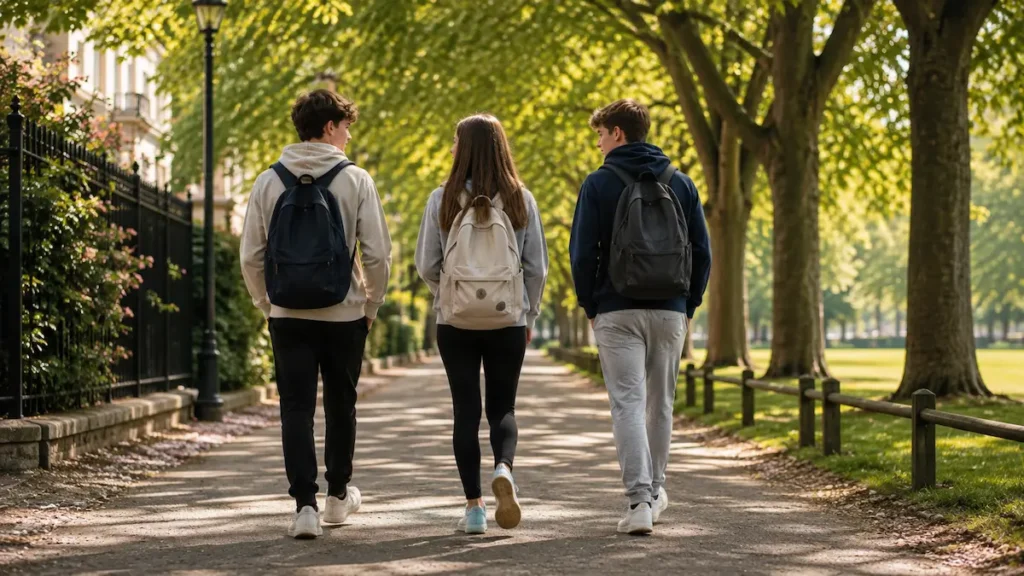
This is probably one of the easiest ways teenagers become more active without even thinking about it.
As they’ve got older, our boys have naturally started walking more.
Into town. To meet friends. To the station. To wherever they’ve arranged to meet.
When they’re younger, we drive them everywhere because we have to.
Then suddenly you realise you don’t need to.
If it’s safe and they’re confident getting themselves around, walking gives them a bit more independence too.
Which is something we’re definitely having to get used to as our boys get older.
Cycling works too
The same goes for bikes.
Cycling doesn’t have to be a big family bike ride that you’ve planned three weeks in advance.
It can literally just be how they get somewhere.
And I’m all for anything that means I’m not permanently operating Mum’s taxi.
Obviously, whether that’s practical depends on where you live and how confident your teenager is on the roads.
But even cycling around a park or using off-road routes gets them out and moving.
Friends are usually better motivation than us
This is something I think most parents of teenagers will recognise.
I suggest something.
“No.”
A friend suggests exactly the same thing five minutes later.
“Yeah, sounds good.”
Right then.
But actually, their social lives can be a really easy way to get them moving.
Walking into town. Cycling to a friend’s house. Playing football. Going swimming. Meeting at a basketball court.
It doesn’t really matter what they’re doing.
They’re out. They’re moving. And they’re not sitting in their bedroom all day.
I’ll take that as a win.
Find days out that work for older kids
Family days out definitely change as kids get older.
The things that entertained them at six aren’t going to work at 13 or 16.
We’ve found we need to choose things a bit more carefully now.
Anything active tends to work well. Especially if there’s something competitive involved.
Karting. Climbing. Adventure golf. Paddleboarding. Theme parks. Water activities.
I’ve got more ideas in my guide to outdoor activities for teens.
And if you’re local to us, have a look through my Surrey days out guides too. There are plenty of ideas that work with older kids and teenagers.
Walking is actually quite underrated
I know. Walking isn’t exactly an exciting sell to a teenager.
But it’s probably one of the easiest ways to get everyone moving.
We’ve found it works better if there’s actually a reason for the walk.
A nice lunch at the end.
Somewhere new to explore.
A decent view.
Cake.
Cake always helps.
We have loads of lovely places near us in Surrey where you can combine a walk with a day out.
My free things to do in Surrey with kids guide has plenty of ideas if you want somewhere that doesn’t cost anything either.
Try something none of you are good at
I actually quite like doing this.
Rather than picking something one person is brilliant at, try something new together.
Paddleboarding. Climbing. Tennis. Kayaking.
Nobody really knows what they’re doing and that’s half the fun.
We’ve got a guide to tennis courts in Surrey for kids and teens if you fancy giving tennis a go without committing to lessons or joining a club.
Just book a court. Take some rackets. See what happens.
Although be prepared for your teenager to somehow become better than you within about ten minutes.
Don’t make it all about exercise
I think this is a big one.
I wouldn’t want every conversation about going outside to turn into how much exercise they’ve done.
Or how many steps they’ve walked.
Or whether they’ve been active enough.
That would annoy me too.
I’d rather focus on getting outside. Seeing friends. Having a break from screens. Doing something together.
The exercise bit can just happen alongside it.
Sport England also has lots of information and research around getting children and young people active if you’re looking for more ideas.
Make being active easy
Sometimes it’s the really boring stuff that helps.
Make sure their bike tyres aren’t flat.
Have a football they can grab.
Know where your nearest tennis or basketball court is.
Make sure they’ve got trainers that actually fit.
And don’t automatically offer them a lift somewhere they could easily walk.
I’m definitely guilty of that last one.
Mostly because it’s quicker.
But if they’ve got the time and it’s somewhere they can safely get themselves to, walking is probably better for both of us.
Screens aren’t the enemy
I’m also not going to pretend my teenagers don’t spend time on screens.
They do.
Phones and gaming are a big part of teenage life now.
For me, it’s more about balance.
If they’ve been at cricket, walked into town or spent half the day out with friends, I’m not particularly worried if they then come home and spend a few hours gaming.
That’s quite different to sitting in the same spot all day.
And some days they’ll be more active than others.
That’s normal too.
Find what works for your teenager
Like most things with teenagers, there’s no magic formula.
One teenager might happily play sport five times a week.
Another might hate organised sport but walk miles with their friends without even noticing.
Both are moving.
As the boys have got older, I’ve realised family life is changing all the time anyway. The days of taking them to the playground are long gone.
Now it’s more about finding things they actually want to do.
And sometimes just getting out of the house together is enough.
Even if there has to be food at the end of it.