
School mornings can be chaotic at the best of times. Getting everyone up, dressed, fed and out of the door isn’t always easy.
But for some families, it’s much more than the usual morning rush.
When a child is struggling with school anxiety, just getting them through the school gates can become a daily battle. And it’s not always something that’s obvious to anyone outside the family.
There’s understandably a lot of focus on the child. What’s making them anxious? Why don’t they want to go to school? And what can be done to help?
But what about the parents?
Because when a child is struggling to attend school, it can have a huge impact on the whole family. Not just emotionally, but financially too.
And new research commissioned by Minerva Virtual Academy shows just how difficult things can become.
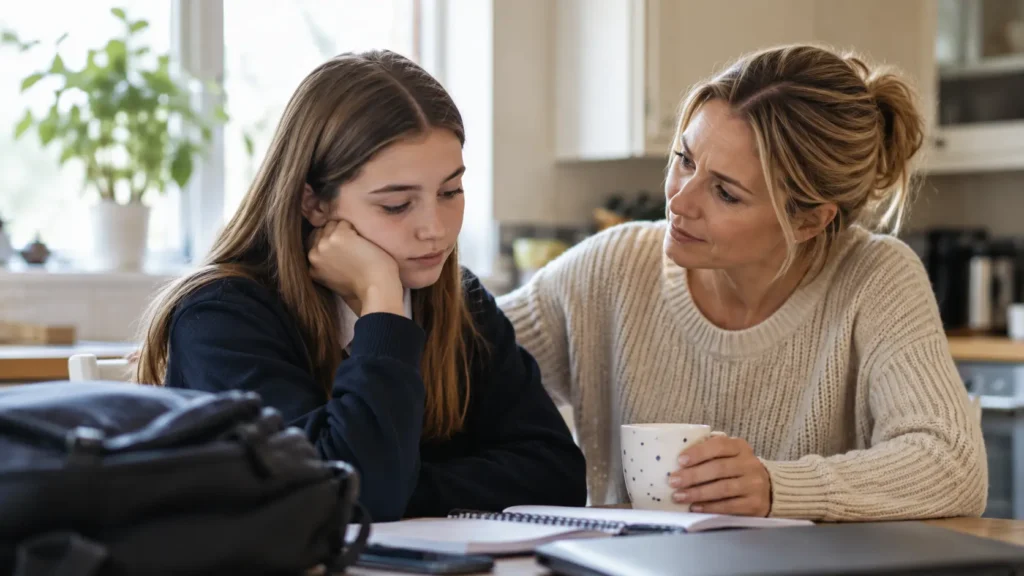
The hard numbers on morning routines
Minerva Virtual Academy recently commissioned research looking at the experiences of 2,000 parents whose children had experienced Emotionally Based School Avoidance (EBSA) or anxiety-related persistent school absence, either currently or within the previous five years.
And some of the findings are quite upsetting.
- 28% of parents said weekday mornings had become the most distressing part of family life.
- More than one in five had cried after an unsuccessful attempt to get their child into school.
- Almost a quarter said the experience had left them feeling as though they were failing as a parent.
That’s a lot of families starting their day feeling stressed, worried or completely overwhelmed.
And it’s worth remembering that when a child struggles to attend school, it’s often much more complicated than simply not wanting to go.
There can be all sorts of reasons behind it.
Parents taking part in the research reported anxiety, autism, ADHD, bullying and unmet additional needs as factors contributing to their child’s difficulties.
Sometimes there might be several things going on at once.
And working out what support a child needs isn’t always straightforward.
The health and financial impact
One of the hardest things for families can be waiting for answers.
You might know your child is struggling, but getting assessments or the right support in place can take time.
In the research, 15% of parents said they were currently waiting for their child to receive a formal diagnosis for autism, ADHD or other additional needs.
Another 14% said their child had waited more than two years for a diagnosis or assessment.
And while all that is happening, everyday life doesn’t just stop.
There are jobs to go to, bills to pay and other family commitments to manage.
Not exactly easy when you’re also trying to support a child who is finding school incredibly difficult.
The research found that:
- Almost a quarter of parents reported physical symptoms of stress, including nausea and migraines.
- One in five said they felt isolated.
- Almost a third said family activities were regularly disrupted.
- More than a third of fathers surveyed said they’d reduced their working hours to support their child at home.
- Nearly one in three fathers said they’d left work altogether.
And then there’s the financial side.
42% of the families surveyed estimated they’d lost up to £10,000 in household income because of their child’s school attendance difficulties.
That’s a significant amount of money, especially when families may already be dealing with the costs of assessments, appointments or extra support.
It’s easy to see how the pressure can build.
One parent might need to take time off work. Another might have to change their hours. And plans that used to be fairly straightforward suddenly become much harder to organise.
School anxiety doesn’t just affect what happens between nine and three.
It can affect pretty much everything around it.
The findings were also reported by School Management Plus, which looked at the emotional and financial impact of school anxiety on families.
Exploring the alternatives
Another finding that stood out was how many parents felt they didn’t know where to turn.
According to the research, almost 90% of families said they hadn’t been given clear information about alternative education options.
And more than one in five felt there was nowhere to go for practical advice.
That’s quite worrying when you think about how much these families are already dealing with.
If a child is struggling to attend school, parents shouldn’t have to spend months trying to work out what help might be available.
Support might involve working with the school to understand what’s causing the difficulties, making adjustments or exploring additional help.
For some children, alternative education arrangements might also be worth considering.
One option is online schooling. Schools such as Minerva Virtual Academy offer structured online education, combining lessons and independent study with support from teachers.
Rather than parents having to take on all the teaching themselves, an online school can provide a more structured approach to learning from home.
For children who find a busy school environment overwhelming, being able to learn from home with a different routine may be helpful.
But it won’t be the right answer for everyone.
The important thing is understanding why a child is struggling and looking at what support or education arrangements would actually meet their needs.
Parents should be able to access clear information about assessments, school support, local authority responsibilities and alternative provision without having to figure everything out on their own.
If your child is struggling with school attendance, Action for Children has a helpful guide with advice on understanding school anxiety and finding support.
Because sometimes just knowing what the options are can make a difficult situation feel a little more manageable.
School anxiety affects the whole family
When people talk about school attendance, the focus is often on getting children back into the classroom.
And of course, education matters.
But these figures are a reminder that there’s often much more happening behind the scenes.
Parents may be trying to support an anxious child while keeping their job, managing family finances and making sure everyone else at home is OK too.
It’s a lot.
And while statistics can’t tell every family’s story, they do show that school anxiety can have consequences far beyond missed lessons.
Getting support early, understanding what’s behind a child’s difficulties and making sure families know where to turn are all important.
Because helping a child who is struggling with school shouldn’t mean leaving the rest of the family to struggle on their own.
About the author
Hugh Viney is the founder of Minerva Virtual Academy, a Department for Education-accredited online school for pupils aged 11 to 18. The school combines live online lessons and independent study with weekly one-to-one mentoring and wellbeing support.