As much as you might enjoy cooking, the cleaning up afterwards isn’t quite so appealing, is it? Between vegetable peelings, leftover food, dirty plates and a sink full of scraps, even a simple family meal can leave you with quite a bit of mess to deal with.
And when you’re cooking for a family most days of the week, it can feel like you’re forever cleaning the kitchen!
A food waste disposal unit (also known as a garbage disposal) can help with some of these everyday jobs. It works by grinding suitable food scraps into small particles that pass through the drainage system, saving you from having to collect every little scrap by hand.
Here’s how having one could make your daily kitchen routine a little easier.
Spend Less Time Collecting Food Scraps
Whether you’re peeling potatoes for a Sunday roast or chopping up vegetables for a midweek dinner, it’s surprising how quickly food scraps can pile up.
You’ve then got the job of gathering everything up, putting it in the food waste bin and cleaning up whatever’s left in the sink.
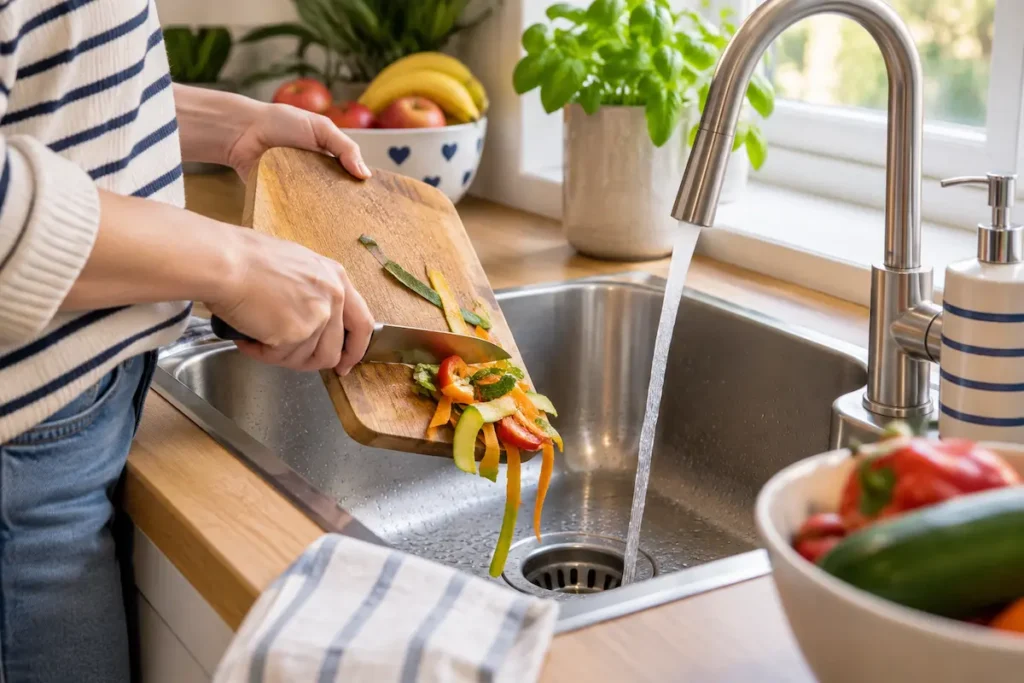
With a disposal unit, suitable scraps can go straight into the unit whilst running cold water, following the manufacturer’s instructions.
It’s particularly handy when you’re preparing several ingredients at once. Rather than stopping every so often to clear everything away, you can deal with the scraps as you go.
Make Washing Up Less Messy
There’s usually something left on the plates after a family meal. And whether you’re loading the dishwasher or washing up by hand, those little bits of food need to go somewhere.
A disposal unit can make clearing plates less messy and save you from having to fish bits of food out of the sink strainer.
Not everything can go down there, though. Large bones, fibrous vegetables, grease and other unsuitable food waste need to be disposed of separately. Always check the manufacturer’s guidance if you’re unsure.
Keep the Kitchen Sink Ready to Use
When you’ve got a busy household, the kitchen sink rarely gets much of a break. Someone’s rinsing vegetables, washing a mug or filling up a saucepan, often whilst someone else is trying to do the washing up!
Being able to clear the sink as you go makes life a little easier. It also means there’s less mess to deal with when you’ve finished cooking.
It’s only a small thing, but when everyone in the family is in and out of the kitchen throughout the day, it can make a difference.
Reduce Food Scraps Sitting in the Kitchen Bin
Nobody likes opening the kitchen bin to be greeted by the smell of yesterday’s dinner. It’s even worse during the summer months when food waste starts to smell much quicker.
Having a food waste disposal unit could mean:
- A cleaner kitchen bin between collections.
- Less wet food waste sitting in the bin, especially when it’s warm.
- Less mess when preparing meals.
- Less time spent gathering up and transferring food scraps.
That doesn’t mean everything should go down the sink, though. If you’ve got leftovers that can be used for lunch the next day or turned into another meal, it’s always worth saving them.
Many of us in the UK also have separate food waste collections, so it’s worth making use of these where appropriate.
Make Busy Cooking Routines Easier to Manage
Mornings can be hectic enough when you’re trying to get everyone fed and out of the door. And by the time you’ve finished work and made dinner, the last thing you probably want to do is spend ages cleaning the kitchen.
Being able to deal with scraps as you’re cooking means one less job to do afterwards.
It might only save you a few minutes here and there, but when you’re cooking most days of the week, those little time savings soon add up.
Choose and Use a Disposal Unit Carefully
If you’re thinking about having one fitted, there are a few things worth checking first.
How much space do you have underneath your kitchen sink? Is your existing plumbing suitable? You’ll also want to look at the electrical requirements, how noisy the unit is and what warranty it comes with.
Before installing a garbage disposal, take some time to look through the installation requirements. You may need to get a professional in, particularly if there’s plumbing or electrical work involved.
It’s also worth checking with your local water company to make sure a disposal unit is suitable for your drainage system and that its use is in line with local guidance.
Once it’s fitted, make sure you follow the manufacturer’s instructions. Don’t put grease, cooking oil or non-food items down it, and check which types of bones and fibrous foods your particular model can handle.
Running cold water and feeding suitable scraps into the unit gradually can also help prevent problems.
Keep Food-Waste Habits in Perspective
Whilst a disposal unit can make cleaning up easier, it’s still important to think about how much food we’re throwing away in the first place.
Planning meals, checking what’s already in the fridge before doing the weekly food shop and making use of leftovers are all simple ways to cut down on food waste. And with the cost of food shopping these days, it makes sense to get as much as we can out of what we’ve bought.
According to the UK government’s Food Security Report 2024, UK households generated an estimated 6.4 million tonnes of food waste in 2021.
That’s a lot of food going to waste!
A disposal unit should be used for suitable food scraps that can’t be avoided, rather than as a way of getting rid of perfectly good food.
A food waste disposal unit isn’t necessarily something every kitchen needs, but if you cook regularly, it could be a handy addition. It’s worth weighing up the cost of having one fitted and whether it would make enough of a difference to your daily routine.
After all, when you’re juggling work, family life and everything else that comes with running a household, having one less kitchen chore to do is always welcome.