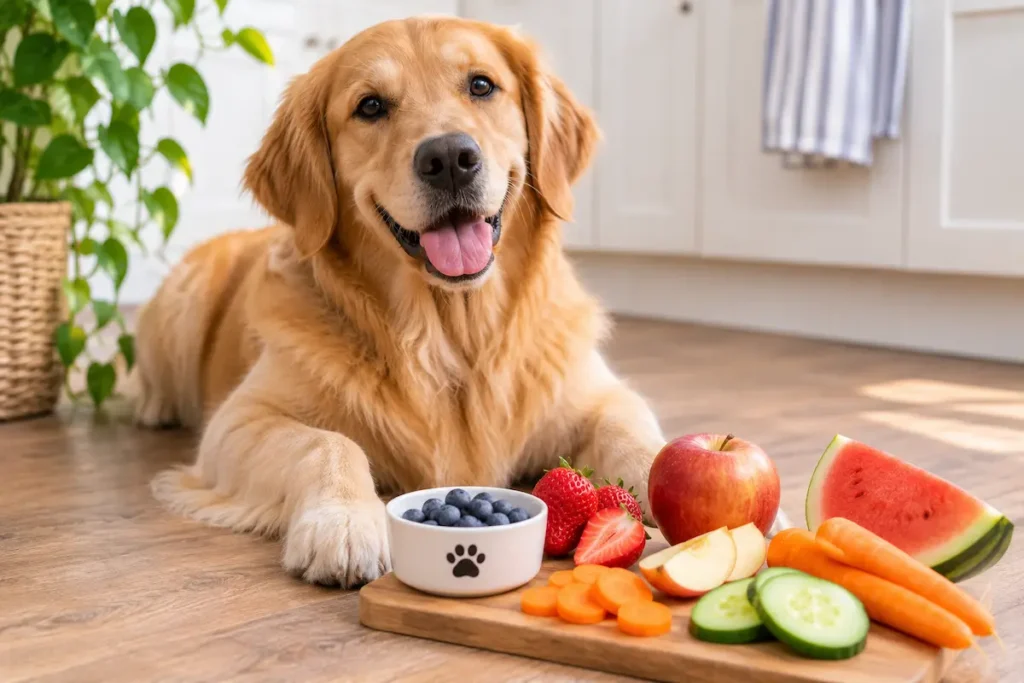
It’s hard to resist those puppy dog eyes, isn’t it? Whether you’re eating an apple, chopping up carrots for dinner or enjoying a bowl of strawberries, there’s often a hopeful little face waiting for you to share.
And whilst there’s nothing wrong with giving your dog the occasional treat, not everything we eat is safe for them. Some fruits and vegetables make great little snacks, but others can make your dog quite poorly.
So, which ones are safe to share, and which ones should you avoid?
Why Some Human Foods Are Safe for Dogs
Whilst your dog’s main diet should come from complete and balanced dog food, there’s no reason why they can’t enjoy certain fruits and vegetables as an occasional treat.
It’s all about moderation, though.
The World Small Animal Veterinary Association recommends that treats make up no more than 10% of a dog’s daily calorie intake. And that includes everything from fruit and veg to dog chews and other treats.
Those little extras can soon add up, especially if everyone in the family is sneaking them a treat here and there! Too many can lead to weight gain or an upset tummy.
Fruits Dogs Can Enjoy as Occasional Treats
There are quite a few everyday fruits that dogs can enjoy, as long as they’re prepared properly.
Some good ones to try include:
- Apples: Remove the core, seeds and stem and chop the apple into small pieces.
- Blueberries: These can be served fresh or frozen. Cut them in half for very small dogs.
- Strawberries: Give them a wash, remove the leaves and slice them up.
- Watermelon: Stick to the seedless flesh and remove the rind, as this can be difficult to digest.
- Bananas: Peel them first and offer a few small pieces. They’re quite high in natural sugar.
- Pears: Remove the seeds, core and stem before giving your dog a small slice.
Remember that fruit contains natural sugar, so it’s best kept as an occasional treat rather than something you give your dog in large amounts every day.
Start with a little piece and see how they get on with it.
Vegetables That Make Good Dog Snacks
If you’re looking for something a little less sugary, there are plenty of vegetables you can share with your dog too.
Carrots are a popular choice and can be given raw or cooked. Just chop them into small, manageable pieces. Green beans are another good option, provided they’re plain and haven’t been cooked with salt or butter.
Other vegetables you could try include:
- Cucumbers: Wash and chop into small pieces for a light, crunchy snack.
- Pumpkin: Plain cooked pumpkin or unsweetened purée can be given in small amounts.
- Sweet potatoes: Make sure they’re fully cooked and served plain, removing the skin if needed.
- Peas: Fresh or cooked peas are fine without any added salt or seasoning.
- Courgettes: These can be served raw or cooked, without oil or spices.
Broccoli and celery can also be given in small amounts. Just don’t go overboard with the broccoli, as too much can leave your dog feeling rather gassy or with an upset tummy.
How to Prepare Fruits and Vegetables Safely
Just because a particular fruit or vegetable is safe for dogs doesn’t mean you can give it to them exactly as you’d eat it yourself.
Large pieces can be a choking hazard, and things like seeds and fruit stones can cause problems too.
There are a few simple things to remember before sharing your fruit and veg:
- Give it a good wash: Rinse fruits and vegetables to remove any dirt or residue.
- Remove anything unsafe: Take out seeds, stones, stems, cores and tough rinds.
- Chop into small pieces: Think about the size of your dog, particularly if they’re one of those dogs that practically inhales their food!
- Keep it plain: No added salt, butter, garlic, sauces, sugar or seasoning.
- Try one new food at a time: That way, if something doesn’t agree with your dog, it’s easier to work out what caused it.
Bully Bunches also highlights the importance of checking how food is prepared before sharing it with your dog. Their guide to fruits and vegetables dogs can eat is a handy reference if you’re ever unsure about what you can give them.
Fruits and Vegetables Dogs Should Avoid
Unfortunately, some of the foods we regularly have in our kitchens can be dangerous for dogs.
Grapes and raisins are particularly concerning as they can cause serious kidney damage. There’s no known safe amount, so if your dog accidentally eats any, contact your vet straight away.
Onions, garlic, leeks and chives are also best kept well away from your dog’s food bowl. They can damage red blood cells and cause anaemia.
And it’s not just the raw versions you need to watch out for. They can be hidden in things like pasta sauces, soups and seasoning mixes too.
A few other things to be careful with include:
- Wild mushrooms: Some are poisonous, so don’t let your dog eat mushrooms they come across whilst out on a walk.
- Sweetcorn cobs: Whilst plain kernels may be fine, the cob itself can cause a dangerous blockage.
- Raw or green potatoes: These can contain solanine, which may be harmful to dogs.
- Fruit stones: Peach, cherry and plum stones can be a choking hazard, cause blockages and may contain harmful compounds.
If you think your dog has eaten something toxic, contact your vet straight away. Don’t wait until they start showing signs of being unwell.
The FDA’s guide to dangerous foods for pets is also worth a read if you want to familiarise yourself with some of the more common food risks.
Watch How Your Dog Reacts to New Foods
Just like us, every dog is different. What agrees with one might not necessarily agree with another.
Your dog might happily munch away on a piece of cucumber, whilst another dog might end up with an upset tummy after eating the same thing.
Whenever you’re introducing something new, start with a small amount and keep an eye on how they react.
Look out for things like vomiting, loose stools, itching or a loss of appetite. If you notice any of these, stop giving them the new food and speak to your vet.
If your dog has allergies, an existing health condition or is on a special diet, it’s always worth checking with your vet before introducing any new treats.
Wrapping Up
There’s nothing wrong with wanting to share the occasional snack with your four-legged friend. And some of the fruit and veg you’ve already got in your fridge can make a nice change from their usual dog treats.
Just make sure you know what’s safe, keep portions small and prepare everything properly. Treats should always be an extra rather than a replacement for their usual dog food.
And if you’ve got children who love sharing their snacks with the dog, it’s worth making sure they know which foods are safe too.
Those puppy dog eyes can be very persuasive, after all!