Ask most teenagers how they’re revising for exams and you’ll probably get a fairly familiar answer.
They’re reading through their notes, highlighting bits of their textbooks or copying things out and hoping it all goes in.
And to be fair, it can look like they’re doing plenty of revision.
But spending hours looking at notes doesn’t necessarily mean they’ll remember everything when it comes to sitting an exam.
The tricky thing is knowing which revision methods actually help.
Because there’s a difference between feeling like you’ve revised something and being able to remember it when you need to.
And with GCSEs and A-levels to prepare for, that’s quite an important difference.
Why rereading feels productive but rarely is
Rereading notes is probably one of the easiest ways to revise.
You sit down, go through what you’ve already written and hopefully some of it sticks.
The problem is that when you’re looking at the information, it’s easy to think you know it.
But take the notes away and suddenly it’s a different story.
That’s where something called active recall comes in.
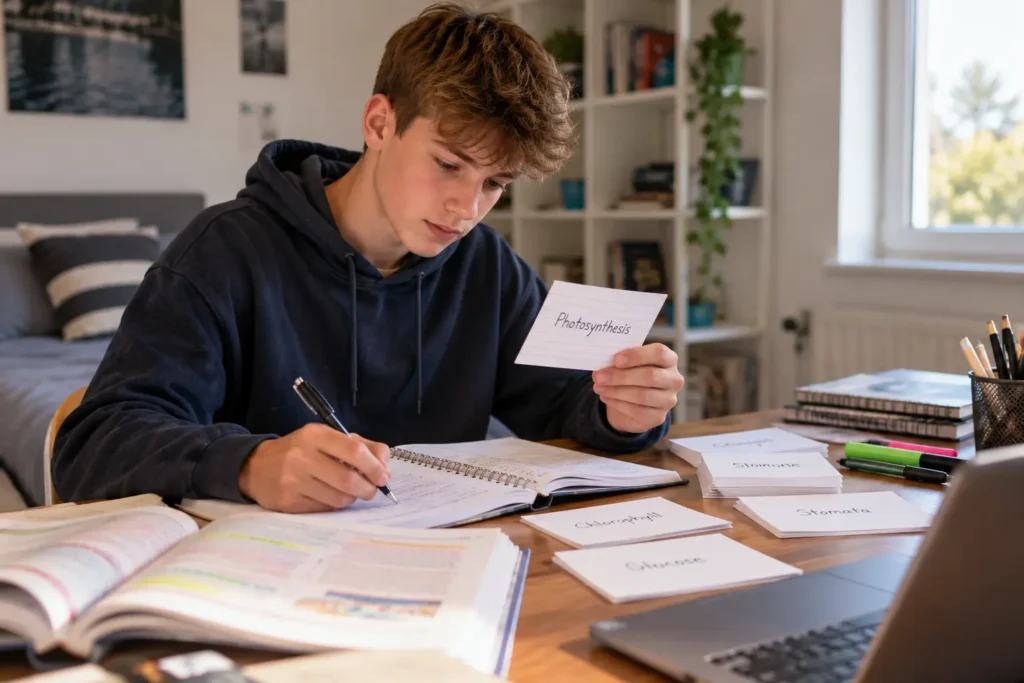
Rather than just reading the information again, teenagers need to try remembering it without looking.
It might mean answering practice questions, using flashcards or simply closing the book and explaining a topic out loud.
Even writing down everything they can remember about a subject before checking their notes can help.
And yes, it might feel harder than reading through a textbook.
But that’s kind of the point.
Having to think about the answer helps strengthen what they’ve learnt, rather than just recognising the information because it’s right there in front of them.
Spacing beats cramming, every time
We’ve probably all seen the last-minute revision panic.
An exam is suddenly only a few days away and there’s a mad rush to try and remember everything.
The problem with cramming is that while it might help teenagers remember something for a short time, they’re more likely to forget it again afterwards.
A better approach is to spread revision out over time.
It’s called spaced practice, and it’s actually pretty straightforward.
Rather than spending three hours on one topic and then never looking at it again, teenagers revisit it regularly.
They might go over something the day after learning it, then a few days later and again the following week.
It doesn’t have to involve a complicated revision timetable either.
Even short sessions can be useful, especially when they’re spread out over several weeks.
And starting earlier means there’s less pressure to squeeze everything into the final few days before an exam.
Which can only be a good thing.
Matching the method to the mind
Of course, not every teenager is going to enjoy revising in exactly the same way.
Some might prefer talking through a topic out loud. Others would rather sit somewhere quiet and work through practice questions.
And different subjects might need different approaches too.
Revising for Maths isn’t quite the same as revising for English Literature, for example.
But whatever method they prefer, the important thing is that they’re actually using what they’ve learnt rather than just reading it over and over again.
Flashcards can be great for remembering facts and definitions. Past papers help teenagers get used to exam questions and working under timed conditions.
If you’re not sure where to start, I’ve put together a guide to the best GCSE revision resources, including websites, apps and revision guides that can help teenagers prepare for their exams.
And explaining a topic to someone else can be a good way of finding out whether they really understand it.
Sometimes it’s only when they try to explain something that they realise there’s a bit they’re not quite sure about.
That’s useful to know before the exam rather than during it!
Schools and colleges can help with this too.
Good teachers don’t just explain the subject. They can also help students understand how to revise it and which techniques are likely to be most useful.
For families looking for a sixth form college with a strong academic record, it’s worth asking what support students receive with revision, independent study and exam preparation.
Collingham College, for example, places an emphasis on small classes and individual academic support, giving students opportunities to develop their study skills alongside their subject knowledge.
Because knowing how to revise is a skill in itself.
And it’s something teenagers can get better at with practice.
The good news is that effective revision doesn’t necessarily mean spending even longer sitting at a desk.
Sometimes it’s about changing what they’re doing during the time they’ve already set aside.
Less rereading and highlighting. More practice questions, testing themselves and going back over topics regularly.
It might take a bit of getting used to, especially if they’ve always revised in the same way.
But finding methods that actually help them remember what they’ve learnt can make exam preparation feel a lot more manageable.
And hopefully take some of the stress out of it too.
This article was contributed by the team at Collingham College, an independent GCSE and sixth form college in central London offering small class sizes and individual academic support. Find out more at https://collingham.co.uk.