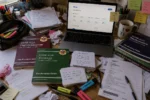

This is a guest post by Jono Ellis, CPO at Cognito. Cognito is an education platform for GCSEs and A-Levels, mainly known for Sciences and Maths, though we also cover other GCSE subjects like English Literature and English Language. Video lessons and revision notes for every topic are free. There’s a weekly limit on questions and flashcards on the free tier, and Pro removes those limits and adds more practice and cheat sheets. Suburban Mum readers get 20% off Pro with the code SUBURBAN20 at cognitoedu.link/suburban-mum.
If your teen’s heading into GCSEs, the next year’s going to be a bit of a marathon, and not just for them. This is the age when they’re technically capable of managing their own workload, and it’s also the age when a bit of parental scaffolding still makes a real difference. The bits worth focusing on are habits, motivation, study techniques and exam practice. None of them need you to know the content.
Build the habit early
One of the most useful things you can do is help your teen build a consistent study habit early, and that doesn’t necessarily mean daily revision. If you’re wondering when GCSE revision should actually start, I’ve shared what worked for us from Year 10 through to the final exams. Depending on the time of year, most of the habit at the start is just staying on top of homework and revising properly for end-of-unit tests. Those tests matter more than they get credit for, because they’re where the study habits get built and they’re the closest thing to real exam practice your teen will get before Year 11. If you’re just getting started, this GCSE revision guide for parents covers everything from creating a revision timetable to helping your teen stay motivated throughout exam season.
Life gets in the way too, with holidays, illness and birthdays all pulling routine off course. The habit doesn’t need to be perfect, and honestly the goal isn’t a rigid daily routine either. It’s more that studying feels like a normal part of the week, rather than something dragged out only when a big exam appears on the horizon.

Tie the habit to something they want
The habit sticks when it’s anchored to something meaningful, and what that looks like varies a lot from teen to teen. For some, it’s a concrete reward for good grades, whether that’s cash, a phone upgrade or a trip they’ve been asking for. Others are chasing something specific, like a particular sixth form, a course with high entry requirements, or an A-Level combination they’ve already picked out. If your teen is already thinking ahead, our guide to choosing the right A Levels can help you explore the options together. A smaller group is simply trying to avoid the version of results day where their friends all have offers and they don’t. It might seem a long way off, but understanding what to expect on GCSE Results Day can help both parents and teenagers feel more prepared.
Any of these can work. What matters is knowing which one is your teen, and connecting the daily work to the thing they want. Revision for the sake of revision rarely holds, but revision aimed at a specific course, offer or reward tends to hold much better.
If you’re not sure what motivates your teen, ask them. It’s a useful conversation to have anyway, and it usually surfaces something you can hook the routine to.
Use active recall, not re-reading
Re-reading notes feels productive because the material looks familiar, but familiarity isn’t the same as memory. What tends to shift grades is active recall: quizzes, flashcards, or closing the book and writing down everything they can remember on a blank sheet. It feels harder because it is harder, which is the whole reason it works.
Even the simplest version of this helps. Asking “what did you learn today?” over dinner might sound trivial, but low-stakes recall built into normal family chat is a habit that pays off across every subject.
Know the exam board and specification
Every subject follows a specification, whether it’s AQA, Edexcel, OCR or something else. Each spec is a public document that lists exactly what a student needs to know. Help your teen figure out which board they’re sitting for each subject, and where to find their spec. You don’t need to become an expert on the content yourself, but making sure they know what’s on their spec is one of the most useful things you can do for their year.
Once they can see the spec themselves, revision stops being a vague worry about whether they’re behind, and starts being a checklist they can work through. As a rule of thumb, if it’s on the spec they need it, and if it’s not they don’t.
Start exam practice early
By the time the real exams arrive, sitting one shouldn’t feel new. Every end-of-unit test at school is a chance to build the exam muscle, and it helps if your teen treats them as mini exams, with timed conditions, phones away and closed-book. The tone worth aiming for is “this is practice for real”, not “just something to get through”.
The teens who sail through their GCSEs have usually sat dozens of practice papers by the time they get there, so the exam room isn’t as unfamiliar as it feels for kids who haven’t.
Use free resources first
Tutors have their place, but they’re not the first line of defence. There’s a lot of free revision content out there now, and much of it’s useful, from YouTube tutorials to past papers on the exam board websites and BBC Bitesize for the basics.
Cognito’s worth knowing about too, and full disclosure, I’m the CPO. We’re mainly known for GCSE Sciences and Maths, though we also cover other GCSE subjects like English Literature and English Language. All the video lessons and revision notes are free, which is the bulk of what most teens need. There’s a weekly limit on questions and flashcards on the free tier, and Pro removes those limits and adds cheat sheets and more practice. Suburban Mum readers get 20% off Pro with the code SUBURBAN20 at cognitoedu.link/suburban-mum.
Watch for burnout
The teens who fall apart at GCSEs are rarely the ones who did too little. More often, they’re the ones who did too much, too intensely, without breaks. Four hours a night of solid work can look like dedication, but it’s usually a sign the routine’s about to collapse.
Push for balance where you can, with full days off, time with friends, sport if that’s their thing, and sleep above all. The teens who protect their downtime tend to do better in the real exams, because they’re mentally fresh when it counts.
Where to stop worrying
GCSEs matter, but there’s a limit to how much of the work is yours as a parent. If the routine’s in place, they know their spec, exam practice is happening and the workload is sensible, you’ve done most of what parents can usefully do. Point them at good resources, keep the routine ticking, and let them do the learning.