
There’s a particular kind of worry that creeps in during exam season.
You watch your teenager sit down to revise, and something just feels… off. They’re restless. Getting up constantly. Saying they can’t concentrate. And it’s easy to assume it’s their phone, or nerves, or just the fact they’d rather be doing anything else.
And sometimes it is all of those things. If you’re already trying to support them at home, you’ll probably recognise a lot of this – especially if you’ve been navigating revision alongside them and trying to figure out what actually helps.
But there’s one possibility that’s surprisingly easy to miss – they might not actually be seeing things properly.
The Signs Are Easy to Miss
Headaches after revision sessions are one of the most common things parents mention when their child is eventually diagnosed with a vision problem. At the time, they assumed it was stress or too much screen time. Looking back, it makes more sense. When the eyes are working harder than they should to focus on text, the strain builds up quickly. An hour of reading feels exhausting in a way it should not.
Other things to watch for include your child losing their place when reading, needing to re-read sentences several times before they take them in, holding a book closer than seems comfortable, or rubbing their eyes a lot during study sessions. Some teenagers also start getting headaches that seem to sit behind the eyes or across the forehead — the kind that paracetamol takes the edge off but never quite sorts.
The tricky part is that these things can look a lot like ordinary revision fatigue or anxiety. And with GCSEs on the horizon, it is easy to put everything down to stress and move on.
Why Exam Season Makes It More Urgent
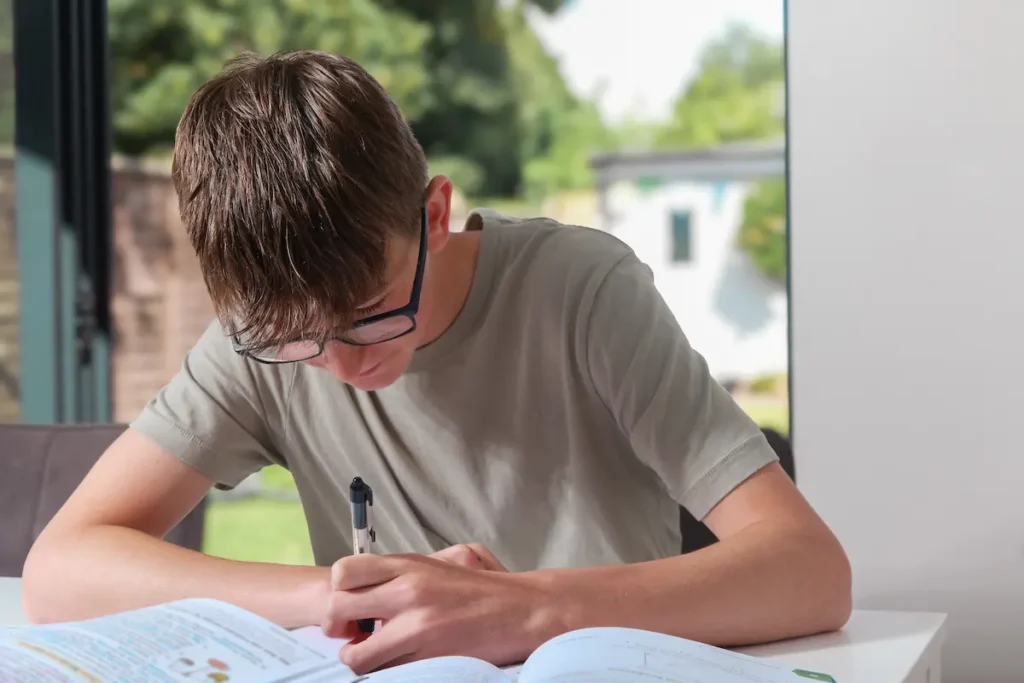
During term time, a slight blur on the board or a bit of eye strain after homework might not feel like a big deal. But revision season is different. The volume of reading goes up significantly. Your child might be spending three, four, five hours a day looking at notes, past papers and revision guides. If their prescription is even slightly out, that kind of sustained close work becomes genuinely hard going.
Reading stamina matters more than people think during exam prep. If your child’s eyes are tiring quickly, their concentration will drop off long before their brain has actually had enough. They might seem unfocused or easily distracted when actually they are physically struggling to keep their eyes on the page. Getting that checked before the pressure really ramps up could make a real difference to how they manage those long revision sessions.
It is also worth thinking about the practicalities. Eye tests are straightforward and usually free for under 16s, and for 16 and 17 year olds in full-time education. If it turns out a new prescription is needed, many parents find it easier to order prescription glasses online around school and work schedules rather than fitting in another trip to the high street. Getting everything in place before the exam timetable kicks in just removes one thing from an already long list. If you’ve already had a look at the key GCSE dates, you’ll know how quickly it all comes around.
What an Eye Test Actually Picks Up
A lot of people think an eye test is just about whether you can read a chart on the wall. It is a fair bit more than that. An optometrist will check how well each eye focuses at different distances, how the eyes work together, and whether there are any early signs of conditions that might affect vision over time.
For teenagers, the most common findings are short-sightedness — where distant things look blurry — and astigmatism, which causes a more general blurriness or distortion that can make reading tiring even when you can technically see the words. Both are very manageable with the right glasses. The difference they make to a student sitting in an exam hall trying to read a question paper can be significant.
The Conversation Worth Having at Home
Most teenagers will not volunteer the information that their vision has changed. They either do not realise, or they do not want to deal with it on top of everything else. So it is worth asking directly, and asking in a way that does not feel like another thing on the to-do list.
Something as simple as asking how their eyes feel after a long revision session can open up a conversation they did not know they needed. Do they get headaches? Does reading feel tiring? Can they see the board easily at school? You might get a shrug. You might get something more useful.
If there is any doubt at all, booking an eye test is a quick and easy thing to do. It rules something out or sorts something that needed sorting. Either way you are not sitting there in August wondering whether it was a factor.
A Small Thing That Can Make a Big Difference
Exam season asks a lot of teenagers. It asks a lot of parents too. Between revision, routines and trying to keep everything ticking along at home, there’s already a lot to juggle. Most of the things that affect performance are complicated — anxiety, sleep, motivation, revision habits. Vision is one of the few things on that list that has a straightforward fix.
If your child is struggling more than you would expect during revision, it is worth ruling out the simple stuff first. An eye test takes half an hour. A new pair of glasses, if they are needed, can be sorted faster than you might think. And the relief of knowing that one thing is not getting in their way is honestly worth it — for them and for you.
Good luck to every parent and teenager heading into exam season. You are doing better than you think.