

Results day is one of those moments you build up to for months. Probably longer, if we’re honest.
You picture how it’s going to go. What the envelope will say. What comes next.
And then sometimes… it just doesn’t quite match what you’d hoped for.
If you’ve found yourself Googling “what to do if GCSE results are bad”, you’re definitely not alone. It’s far more common than it feels in the moment – it’s just not something people talk about much.
(If you’re still in the build-up stage, it’s worth having a quick look at the GCSE exam timetable so you know exactly when everything’s happening. It helped us feel a bit more in control when revision season kicked in.)
First things first — give it a minute
It’s really tempting to jump straight into problem-solving mode.
In our house, I’d probably be mentally mapping out Plan A, B and C within about five minutes…
But actually, the first thing that helps (even though it feels counterproductive) is just… pause.
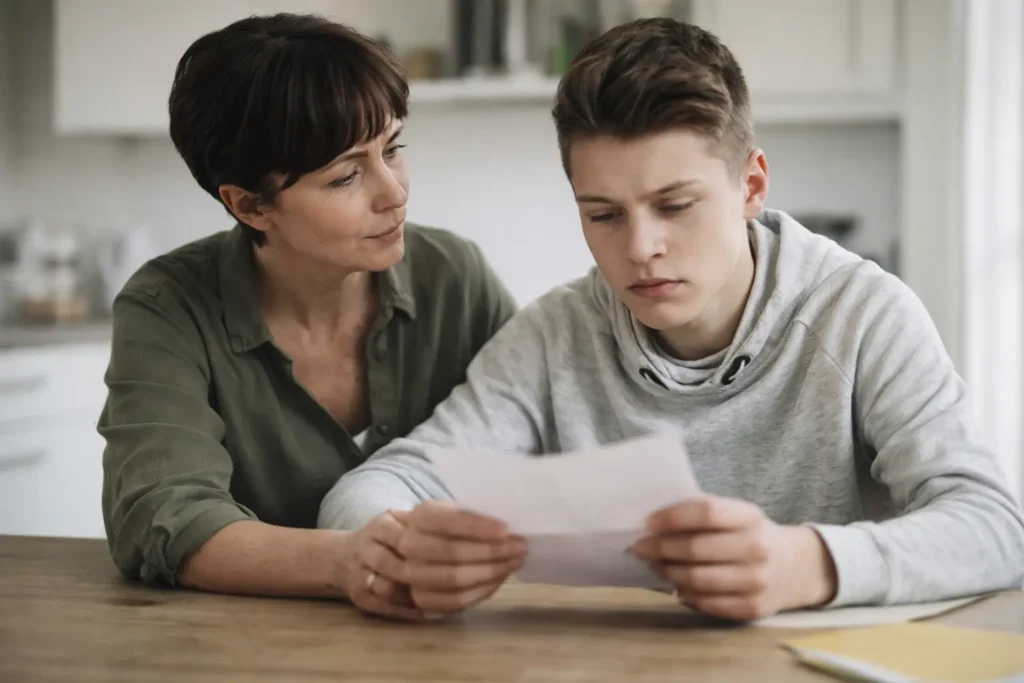
Your teen might be upset. Or quiet. Or weirdly fine and then upset later. You might feel disappointed, worried, frustrated – all of it at once.
Let it settle a bit before diving into “what are we going to do next”.
Nothing needs to be fixed in the first hour.
It’s worth double checking everything
Before assuming the worst, it’s always worth checking the results properly.
Schools are usually really good at helping with this on the day. If something feels off – a subject that doesn’t match expectations, for example – they can talk you through next steps.
Sometimes that leads to a review or remark. Not always, but it’s an option.
You don’t need to understand the whole system straight away. The school will guide you.
Talk to the school or sixth form sooner rather than later
This is probably the thing that helps most.
Even if the grades aren’t what you expected, it doesn’t automatically mean doors are closed.
Sixth forms and colleges deal with this every single year. Entry requirements can be flexible in some cases, especially if they can see potential or if it’s only one subject that’s off.
Sometimes just having that quick conversation makes things feel a lot clearer.
(If you’re weighing up next steps, I found it really helpful looking into the differences between sixth form and college – it gives you a better idea of what might suit your child best.)
What are the options if GCSE results aren’t what you expected?
This is usually the bit where it all starts to feel a bit overwhelming, because suddenly there are lots of different paths.
But when you break it down, it’s not as complicated as it first seems.
Some of the common options include:
- staying on the same path (if the school allows it)
- switching subjects to ones with lower grade requirements
- moving to a different sixth form or college
- resitting one or two GCSEs
- looking at more vocational courses or apprenticeships
You don’t have to figure all of this out immediately. Most schools will talk it through with you step by step.
And honestly, a lot of teenagers change direction slightly at this point anyway — even when results are what they expected.
When expectations and reality don’t match
This is probably the hardest part.
Because it’s not just about grades. It’s about all the expectations tied up in them.
What they thought they’d get. What you thought they’d get. What teachers predicted. What friends got.
It can feel quite heavy.
In our house, I’ve realised how important it is not to jump straight to “what went wrong”. Even if that’s the question sitting in your head.
Most teenagers already know.
What they usually need first is a bit of space and reassurance. That this isn’t the end of anything. Even if it feels like it in the moment.
A few things that help (from one parent to another)
These are the small things that tend to make a difference, even if they seem obvious:
- keep conversations low pressure — not everything needs to be solved straight away
- avoid comparing with friends or siblings (hard, but it really doesn’t help)
- focus on next steps rather than what’s already done
- remind them that there isn’t just one “right” path
And also… try not to carry all the worry on your own.
It’s easy to do that as a parent.
(If you’re still in the revision stage with younger teens, you might also find this helpful – how to support your teen during GCSE revision – it made a big difference for us keeping things calmer at home.)
This really isn’t the end of the road
It sounds like something people say to make you feel better, but it is genuinely true.
There are so many different routes now — sixth form, college, resits, apprenticeships — and plenty of people end up exactly where they want to be, just via a slightly different path than they expected at 16.
If you’re in this position right now, it might feel a bit uncertain. That’s completely normal.
But it’s not a dead end. Not even close.
And in a few months’ time, things will probably feel a lot clearer than they do today.
Related GCSE guides for parents
If you’re working through GCSE season right now, these might help: