

Raising environmentally conscious children is one of those things that sounds quite big when you first think about it.
Like… are we meant to be doing more? Saying more? Getting everything right?
But when you actually get into it, it’s usually the small, everyday stuff that matters most.
The conversations you have without really planning them. The habits that just sort of happen over time. The little choices that become normal in your house without anyone really noticing.
If you’ve got older kids (or teens like we do), you’ve probably already seen it. They pick things up from school, TikTok, friends… sometimes more than you expect.
Which can make it feel like you’re supposed to have all the answers.
We definitely don’t.
What’s made the biggest difference for us hasn’t been anything complicated. Just slowing things down a bit. Pointing things out. Letting them see that small choices actually do add up.
If you’re trying to do the same, this is what’s worked (most of the time anyway).
Start with Wonder, Not Fear
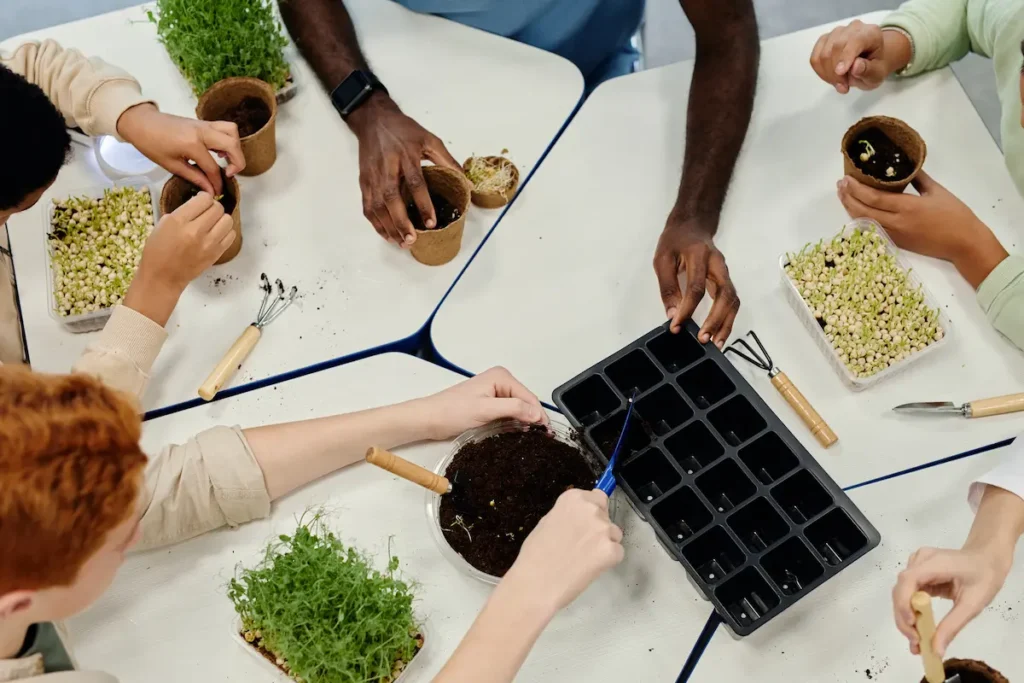
Children who love the natural world will want to protect it. Before you introduce the language of climate change or environmental crisis, build a genuine relationship between your child and nature. Walk together in parks and woodland, grow something from seed, watch documentaries that celebrate the extraordinary diversity of life on Earth.
Curiosity and care grow from connection. Anxiety, introduced without that connection, tends to feel overwhelming rather than motivating. Give your child reasons to love the world before you ask them to worry about it.
Model the Behaviours You Want to See
Children absorb the habits of the adults around them far more readily than they absorb instructions. If you compost, recycle mindfully, choose products with minimal packaging, and talk naturally about why those choices matter, your child will internalise those values as normal rather than exceptional. This is not about perfection; it is about consistency and honesty.
When you do make an environmental choice as a family, name it simply: ‘We’re choosing this because it creates less waste.’ Children respond to reasons far better than rules.
Give Them Real Responsibility
Children who are given genuine responsibility for environmental actions develop a sense of personal agency that stays with them. Give a child ownership of the household recycling station. Involve them in decisions about reducing energy use. Let them plan a meal based on seasonal, local ingredients. When children see that their actions make a tangible difference, even a small one, they feel capable and motivated to do more.
Connect It to the Subjects They Love
Environmental themes run through every subject area. Geography explores ecosystems and climate. Science explains how human activity affects natural systems. Art and design can explore sustainability through materials and creativity. Schools with a strong focus on sustainability and environmental education help children see these connections across the curriculum, building a coherent and grounded worldview rather than isolated facts.
Talk About It Honestly and Hopefully
Children can handle more truth than we often give them credit for, provided it is delivered with warmth and a sense of possibility. Be honest about environmental challenges, but always bring the conversation back to action: what individuals are doing, what communities are trying, what scientists and engineers are working on, and what your family can contribute.
Raising environmentally conscious children is not a single conversation but an ongoing one, woven into daily life.
And it shifts as they get older too. What works when they’re younger looks very different once they start wanting more independence.
We’ve definitely found that in our house – it’s a bit like when you start thinking about things like pocket money or part-time jobs, and how much responsibility to hand over.
It is also one of the most worthwhile conversations you will have.
New Hall School, a Catholic independent school for girls in Chelmsford, Essex, places sustainability and environmental responsibility at the heart of its values and curriculum. To find out more about life at New Hall, visit https://www.newhallschool.co.uk/.
This post was written in partnership with New Hall School, a leading independent Catholic school for girls in Chelmsford, Essex, offering outstanding education from nursery through to sixth form.