
When teens and young adults are preparing to leave home, families often focus on budgets, laundry, transportation, and school or work schedules. However, it’s also important that kids leave home armed with at least some basic knowledge of safe food storage, preparation, and related practices. Knowing how to shop, store, cook, and clean safely can help older kids protect themselves and others from foodborne illness. If you’re not sure how to help your older kids develop food-safe habits, here are some tips:
Start with smart grocery shopping
Take your teenager food shopping and show them what to check before they put something in the trolley. Before you leave home, show them how to check the Food Standards Agency website for current food recalls and alerts. They can also check information published by manufacturers and retailers. This is particularly useful when reports concern fresh produce or contamination, such as a Cyclospora recall.
In the supermarket, pick up chilled and frozen food towards the end of the shop. Check use-by dates on perishable food and avoid damaged packaging, leaking containers or swollen packets. Put raw meat and fish in separate bags so that any leaking liquid cannot reach bread, fruit, or other food you will eat without cooking.
Go straight home with chilled and frozen shopping where possible. On a warm day or during a longer journey, use an insulated bag or cool box for food that needs refrigeration. This can also help if your teenager will rely on buses or trains for the journey home.
Make fridge rules simple
Keep the fridge at 5°C or below, in line with Food Standards Agency guidance. If your child is moving into university accommodation or a shared house, give them a fridge thermometer so they can check the temperature rather than relying on the dial.
Store raw meat and fish below ready-to-eat food and put them in sealed containers to catch leaks. Cover leftovers and refrigerate them as soon as they have cooled sufficiently, and teach your child to check storage instructions and use-by dates rather than relying on smell or appearance to decide whether perishable food is safe to eat.
Teach four basic habits
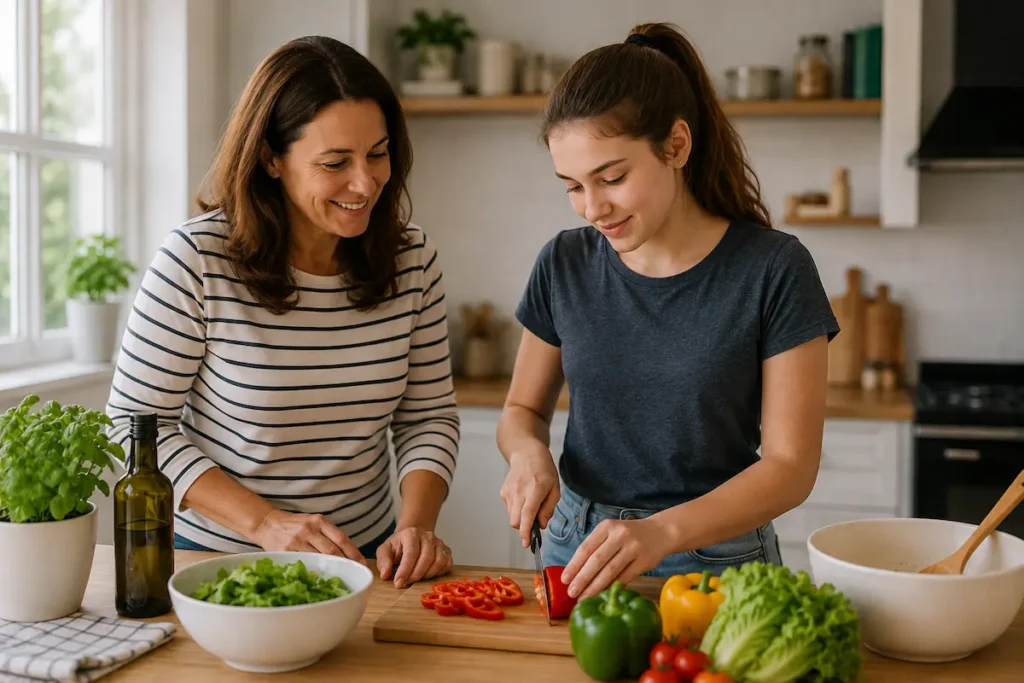
Give your child four rules to use whenever they prepare food: wash, separate, cook and chill.
- Wash . Wash your hands with soap and warm water before preparing food and after handling raw meat or fish. Wash worktops, chopping boards and utensils after use as well. Do not wash raw chicken. Water can splash bacteria from the chicken onto the sink, worktop and nearby utensils.
- Separate. Keep raw food away from anything that will be eaten without further cooking. Use separate chopping boards for raw meat and ready-to-eat food where possible. If your child has only one chopping board, they need to wash it thoroughly between tasks.
- Cook. Cook food all the way through. Teach your child to follow the cooking instructions on packaged food and check that meat is properly cooked before serving it. If they use a food thermometer, show them how to check the thickest part of the food and follow current UK guidance on safe cooking temperatures and times.
- Chill. Put chilled food back in the fridge promptly and defrost frozen food in the fridge where possible. If your child uses a microwave to defrost something, they should cook it straight afterward.
Practice before they move out
Give your teenager responsibility for a few meals while they still live at home. Ask them to choose the meal and buy the ingredients. Then have them store the shopping correctly and cook the food themselves. They should also refrigerate any leftovers once they have finished. This is a great way to encourage good food habits, and it may even spark their culinary curiosity!
Use food they already eat to explain common problems. Ask what they would do with chicken that has passed its use-by date or takeaway pizza left on a desk overnight. Show them why they should never taste food to determine whether it is safe.
These situations also give you a chance to correct habits before your child has to manage their own kitchen. If they put cooked food on a plate that previously held raw chicken, for example, explain the cross-contamination risk and get a clean plate.
Prepare them for a shared kitchen
If your child will live in university halls or a shared house, teach them to assume responsibility for their own food and cooking equipment. Label food where necessary and store raw ingredients correctly even if other people in the house do not.
Clean a shared worktop before preparing food if you do not know what someone used it for previously. Use clean cloths and tea towels and replace them regularly. Wash chopping boards and utensils before using them if another person has left them dirty – and teach them to show respect for others by always cleaning up after themselves.
Fridge space can cause problems in a shared house. Your child should know which shelf or section they can use and avoid packing food so tightly that cold air cannot circulate properly. They should also refrigerate takeaway and restaurant leftovers promptly if they plan to eat them later.
Give them the equipment they need
Your child does not need a kitchen full of specialist equipment to handle food safely. Make sure they have a chopping board that they can clean properly and containers with secure lids for leftovers. Add a fridge thermometer if they cannot easily check the appliance temperature.
Then make them use those items while they still live at home. Food safety becomes much easier once checking the fridge, washing a chopping board and putting leftovers away form part of the normal cooking routine.
Food safety is one of the practical skills your child will need when they start living independently. Teach them the rules at home and give them enough opportunities to practice. By the time they move out, they should know how to shop for food safely, store it correctly and prepare a meal without introducing avoidable risks.