Some children seem to be naturally kind, don’t they? They’re the ones who notice when someone’s upset, offer to help without being asked or make sure nobody gets left out.
Others might need a bit more encouragement.
But kindness isn’t necessarily something children are just born with. It’s something they can learn, and get better at over time.
A bit like learning to share, take turns or say sorry when they’ve upset someone.
And when you think about it, that makes sense. Children aren’t going to know how to handle every situation straight away. Sometimes they need a bit of help working out what to do.
Which is where schools can play a big part.
Where the learning actually happens
Teaching children to be kind doesn’t have to involve sitting them down for a lesson about being nice.
A lot of it happens during a normal school day.
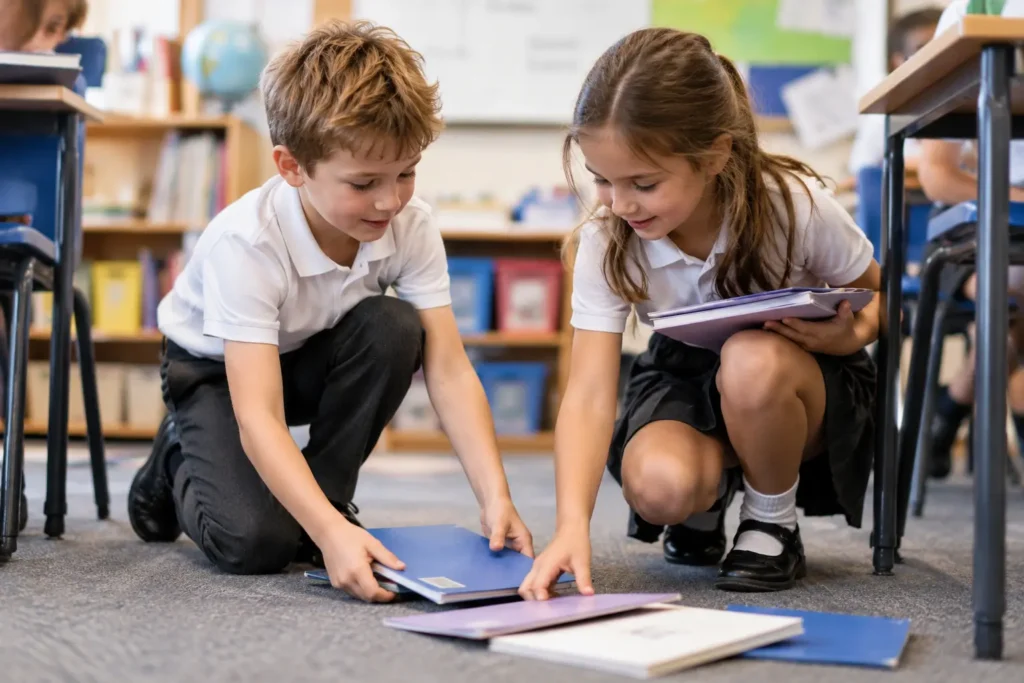
Two children arguing over a game. Someone being left out at playtime. A child dropping their lunch and not knowing what to do.
All those little moments give children a chance to think about how someone else might be feeling.
And what they could do about it.
Of course, they’re not always going to get it right. Especially when they’re tired, frustrated or upset themselves.
But that’s part of learning too.
Rather than just stepping in and sorting everything out, teachers can help children talk through what happened. Why someone might be upset, what they could have done differently and how they might put things right.
It’s also worth looking at how a school approaches kindness generally.
Because let’s face it, it’s easy to put words like respect, kindness and community on a school website.
But what does that actually look like day to day?
Do teachers speak kindly to the children? Are pupils encouraged to help each other? What happens when friendships go wrong?
Those are the sorts of things that tell you quite a lot.
For families looking for a prep school that treats character as seriously as academic progress, it’s worth paying attention to those everyday interactions when visiting.
Older children helping younger ones. Teachers noticing when someone’s done something thoughtful. Pupils being encouraged to sort out disagreements rather than just being told off.
Nothing particularly complicated.
But all those little things can help make kindness part of everyday school life, rather than just something children are told they should be.
Why practice beats good intentions
Most children know they’re supposed to be kind.
But knowing what you should do and actually doing it are two different things.
A child might notice their friend is upset but have no idea what to say. Or they might know they should share, but find it really difficult when someone wants the toy they’re playing with.
And sometimes, even when they know better, their feelings get the better of them.
It happens.
Learning to be kind takes practice. Sometimes quite a lot of it.
Children need time to work out how to manage their feelings, understand someone else’s point of view and think about what they could do to help.
And they’re going to make mistakes along the way.
A child who snaps at a friend or refuses to share isn’t automatically an unkind child. They might just be having a difficult moment.
That doesn’t mean ignoring the behaviour, of course. They still need to understand when they’ve upset someone and why it matters.
But rather than making them feel bad about themselves, it’s often more useful to talk about what happened and what they could try next time.
Because that’s how they learn.
And these skills don’t just help with friendships either.
Being able to listen, work with other people, deal with frustration and understand different points of view are all useful in the classroom too.
Kew College Prep is one example of a school that puts importance on both academic learning and children’s personal development.
It’s about recognising that doing well at school isn’t just about getting good marks. How children treat the people around them matters as well.
And really, that’s something worth encouraging from an early age.
Because being kind doesn’t mean children will always get everything right.
There will still be arguments, disagreements and moments when someone says something they shouldn’t.
But if children are given the chance to practise kindness, see it in the adults around them and learn from their mistakes, those little things can start to become habits.
And hopefully, habits that stay with them as they grow up.
You can read more about the school’s wider approach at https://kewcollegeprep.com.
This article was contributed by the team at Kew College Prep, an independent preparatory school in Kew, south-west London, educating children aged 3–11. The school places an emphasis on academic learning alongside character development, wellbeing and creating a supportive school community.