It’s Tuesday morning and a four-year-old is sitting at the kitchen table asking for more toast. She asks in English. Her dad answers in Mandarin. She switches between the two without even thinking about it, reaches for the butter and carries on with her breakfast.
To her, speaking two languages isn’t anything unusual. It’s just how the people around her talk.
And that’s often what growing up bilingual looks like. Not sitting down with flashcards or having formal lessons. Just everyday life, with two languages being used along the way.
Little conversations, familiar routines and lots of repetition. Until eventually, switching between the two starts to feel completely normal.
Immersion is a rhythm, not a lesson
When you hear the word immersion, you might imagine something quite intense. Lots of lessons, practising words and trying to fit in as much language learning as possible.
But it doesn’t really have to be like that.
For young children, learning another language can be as simple as hearing it and using it as part of their normal day.
Maybe one parent speaks Mandarin at home, while the other speaks English. Or perhaps there’s a grandparent who always speaks to them in another language.
It could be songs in the car, bedtime stories or chatting while getting ready for school. Even the little things like asking for a snack or tidying up toys.
It all counts.
And it doesn’t need to feel like learning either. Children are often pretty good at picking up on which language is used with different people. Give them enough time and regular exposure, and switching between the two can become something they do without giving it much thought.
The messy middle is normal
There might be times when you’re raising a bilingual child and wonder whether they’re getting a bit confused.
Perhaps they’ve started mixing English and Mandarin in the same sentence. Or they know exactly what they want to say but can’t quite remember the word in one language, so they use the other instead.
Sometimes they might understand everything you’re saying but not actually say much back.
It’s easy to worry about these things, especially when you’re comparing their language development with other children.
But mixing languages is actually quite common.
Children are learning two different ways of communicating, and they’re not necessarily going to develop at exactly the same pace in both.
They might know more words in English because that’s what they use at school. Or perhaps Mandarin comes more naturally because it’s what they hear at home.
Neither is necessarily a problem.
There’s been quite a bit of research into bilingualism and how it affects children’s development. Some studies have suggested benefits when it comes to things like understanding different perspectives, although research into attention and other thinking skills has had mixed results.
The main thing is not to get too caught up in comparing every little milestone.
And try not to correct every mistake. Nobody really enjoys being corrected halfway through a conversation, do they?
Instead, you can repeat the word naturally in your reply, without making a big thing of it.
Of course, if you’re worried about your child’s speech or language development, it’s always worth getting some advice. Being bilingual doesn’t mean every difficulty should automatically be put down to learning two languages.
When school shares the work
Speaking two languages at home is a great start. But there’s also a difference between using a language with your family and using it out in the wider world.
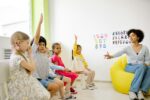
At home, children might use Mandarin when chatting over dinner or talking to grandparents. At school, they’re suddenly hearing it from teachers and friends too.
And in all sorts of situations.
During lessons, while playing, asking questions or trying to explain something to a friend.
This is where a bilingual school where children learn across two languages from the earliest years can help.
Rather than having one language lesson a day, children get to use both languages throughout their school routine.
So they might be learning maths, listening to stories or chatting with friends, all while using English and Mandarin.
Kensington Wade, for example, brings both languages into everyday school life. The idea is that children become comfortable using either language, rather than seeing one as something they only use during lessons.
You can find out more about how the school works at https://kensingtonwade.com.
That’s not to say children need to attend a bilingual school to become bilingual. Plenty grow up speaking two languages through family life alone.
But having that extra opportunity to hear and use both languages can be helpful, especially when they’re young.
Small habits that make the biggest difference
It’s easy to think you need some sort of big plan when you’re raising a bilingual child.
But really, it’s often the small things that matter most.
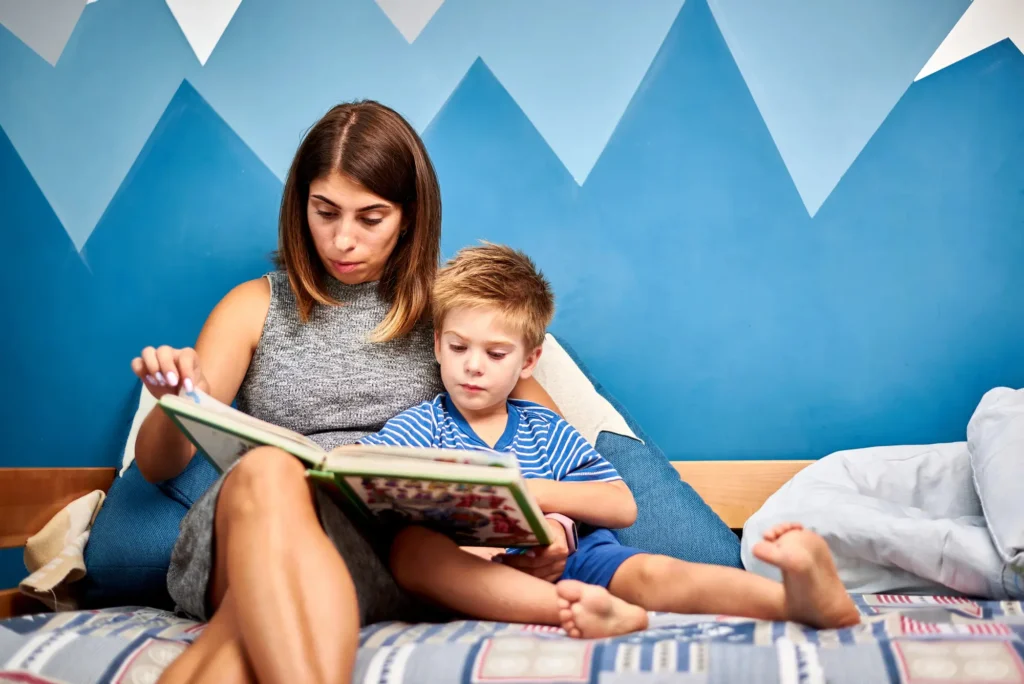
Reading a bedtime story in another language. Singing songs in the car. Having a chat over breakfast or letting grandparents speak to the children in the language they’re most comfortable with.
Nothing particularly complicated.
Reading together is a good one because children get to hear words they might not come across in everyday conversation.
And if they have friends or family members who speak the language too, even better. It gives them another reason to use it, without feeling like they’re being asked to practise.
One thing that’s worth remembering is that progress isn’t always going to be even.
There might be months when one language seems to be coming along really well, while the other takes a bit of a back seat.
Then things change again.
That’s quite normal, especially as children get older and start spending more time at school or with friends.
Try not to put too much pressure on it. The last thing you want is for every conversation to turn into a language lesson.
Because going back to that little girl at the breakfast table, she’s not thinking about improving her Mandarin or practising her English.
She just wants another slice of toast.
And really, that’s the aim. For both languages to feel like a normal part of life, rather than something children have to work at all the time.
This article was written by the team at Kensington Wade, a specialist English and Mandarin dual-language school in London offering an immersive education for young children. Kensington Wade combines British and Chinese teaching approaches, with both languages playing a part in pupils’ everyday learning.