

Moths have a habit of ruining favourite jumpers and much-loved rugs without anyone noticing until the damage is done. Unlike many household pests, they tend to thrive in dark, undisturbed areas such as wardrobes, drawers and underneath furniture. By the time you spot a hole in a coat or a bare patch in a carpet, an infestation may already have been there for some time.
Understanding what actually causes the damage can help explain why certain fabrics are more vulnerable than others, and why a moth problem can go unnoticed for so long. The main culprits aren’t usually the adult moths you see flying around, but their larvae, which can feed on natural animal fibres found around the home.
The Real Culprits Behind Fabric Damage
It is the larvae of clothes moths, rather than the winged adults, that cause the fabric damage most people associate with an infestation. Adult clothes moths don’t feed on clothing. Instead, females lay their eggs in places where the larvae will have access to a suitable food source once they hatch.
The larvae feed on keratin, a protein found in animal-based materials such as wool, fur, feathers and hair. This is why items containing natural animal fibres can be particularly vulnerable to clothes moth damage.
If you’re dealing with a persistent infestation, home remedies may not always be enough to get on top of it. Professional pest control for moths can be an option, particularly if it’s difficult to work out where the moths are breeding or the problem keeps returning.
Why Some Fabrics Are More Vulnerable to Moths
Wool and other animal-based fibres are particularly vulnerable to clothes moth larvae because they contain proteins the larvae can use as a food source. Items made from cashmere, fur and feathers can also be at risk. Silk can sometimes be damaged too, particularly when fabrics are soiled or blended with other animal fibres.
Cotton, linen and synthetic materials such as polyester are generally less attractive as a food source, although mixed fabrics and items contaminated with food, perspiration or other organic residues may still be affected.
That’s one reason it’s a good idea to clean clothes before storing them away. A worn wool jumper with traces of perspiration or food on it may be more attractive to moths than one that’s been freshly cleaned. Wool carpets and rugs can also be vulnerable, particularly in quiet areas underneath furniture, along skirting boards or in rooms that aren’t used very often.
Recognising the Signs of an Active Infestation
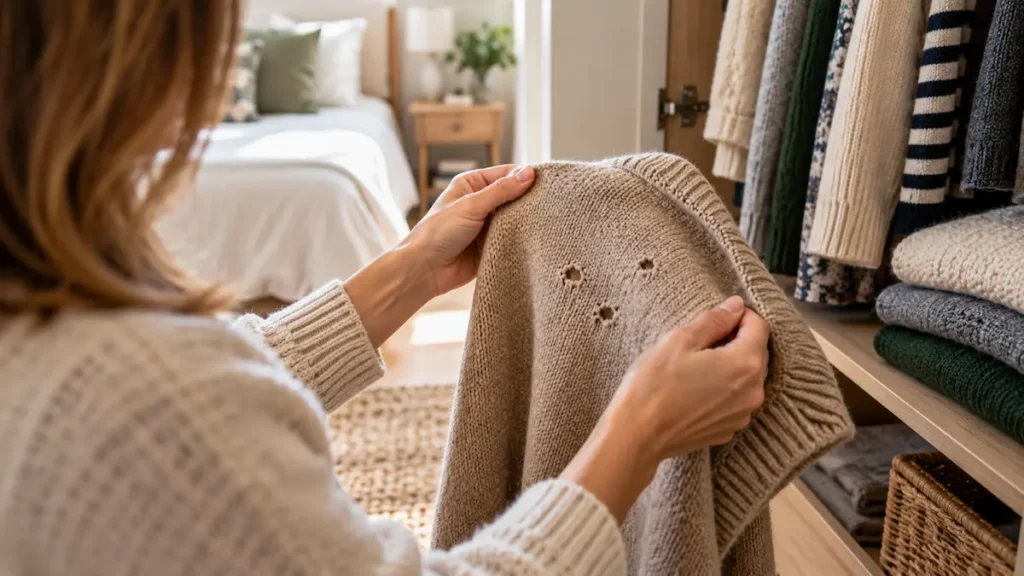
Holes are the most obvious sign of moth damage, but they aren’t necessarily the first thing you’ll notice. Small or irregular holes in clothes, particularly in areas that have been folded or left undisturbed, can be a warning sign.
You might also spot webbing, cases or small amounts of debris around affected fabrics. Depending on the species, clothes moth larvae can leave behind silken material as they feed and develop.
Seeing the occasional moth in your home doesn’t automatically mean you have a clothes moth infestation, as there are many different species of moth. However, repeatedly seeing small moths around wardrobes, carpets or stored clothing is worth investigating, especially if you’ve also noticed fabric damage.
Protecting Fabrics From Long-Term Damage
Regular cleaning is one of the simplest ways to reduce the risk of moth damage. Clothes that are going into long-term storage should ideally be washed or dry-cleaned first rather than packed away after being worn.
Once clean, vulnerable items can be stored in sealed bags or containers to make it harder for adult moths to reach them and lay eggs. It’s also worth vacuuming carpets regularly, including underneath furniture, along skirting boards and inside wardrobes, paying particular attention to areas that don’t normally get disturbed.
If you discover signs of moths, check nearby clothes and fabrics too rather than concentrating only on the item that’s visibly damaged.
Keeping Fabrics Safe Over Time
Moth damage can build up gradually, particularly when natural-fibre clothing, carpets or other fabrics are left undisturbed for long periods.
Keeping vulnerable items clean, checking stored clothes from time to time and regularly vacuuming less accessible areas can all help reduce the risk. If you continue to find larvae, webbing or fresh fabric damage despite cleaning and treating the affected areas, it may be worth getting professional advice to identify the source of the infestation and decide on the best way to deal with it.