

Drama has a visibility problem in education. It is often discussed as enrichment, as an enjoyable but essentially optional pursuit that sits outside the serious business of academic learning. This is a significant misunderstanding of what drama actually does, and it matters because the skills built through dramatic activity are among the most transferable and most in-demand of any developed in school.
Empathy and Perspective-Taking
At the heart of dramatic activity is the act of inhabiting another person’s point of view. To play a character convincingly, a child must genuinely try to understand how that character sees the world, what they want, what they fear, and what drives their behaviour. This extended exercise in imaginative empathy is one of the most effective ways of developing the capacity for perspective-taking, which underpins kindness, social intelligence, and the ability to work effectively with other people.
Communication and Presence
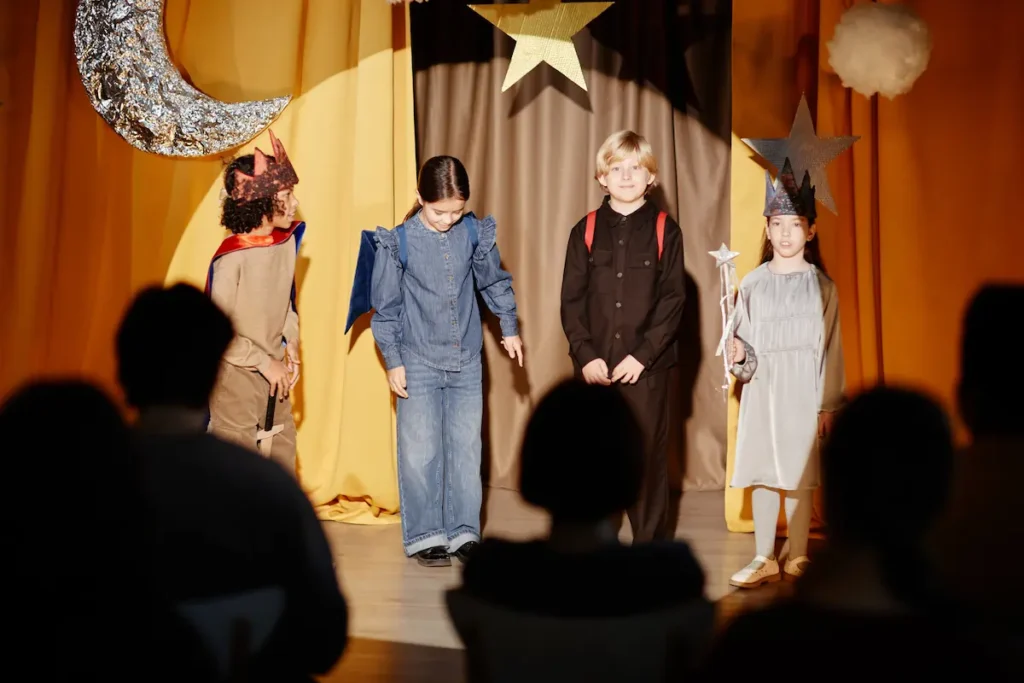
Drama teaches children to use their bodies and voices as communicative instruments. Posture, movement, projection, pace, pause: these are skills that make a direct, practical difference in presentations, interviews, social situations, and professional life. Children who have trained in drama tend to be more comfortable being the focus of attention because they have practised precisely that, in a safe and supportive environment.
Collaboration and Ensemble
Theatre is an ensemble art. Productions require every member to be present, prepared, and attentive to the group. No individual can succeed at the expense of the whole. This experience of genuine, disciplined collaboration, in which the work demands that you listen, adapt, and support those around you, is remarkably good preparation for almost every professional environment a young person will encounter. schools with a genuine commitment to the performing arts, such as St Christopher’s Hove, build drama into their provision precisely because they understand these wider developmental benefits.
Creative Confidence
Drama gives children permission to be playful, inventive, and expressive in ways that other subjects do not always allow. This creative confidence, the willingness to try something, to be ridiculous, to fail openly and try again, transfers to other areas of learning in ways that are hard to quantify but easy to observe. Find out more at https://www.stchristophershove.org.uk/.
About the Partner: St Christopher’s Hove is an independent co-educational prep school offering excellent academic preparation alongside a rich programme of creative arts, sport, and outdoor learning in a warm and nurturing community environment.