
Learning a musical instrument is one of the few things that has been shown to engage almost every region of the brain simultaneously. The visual, auditory, motor, and emotional systems all activate together in a way that no other activity quite replicates. If you are looking for a pursuit that genuinely and measurably enriches a child’s development, music is almost certainly it.
The Cognitive Case
Studies have associated musical training in children with stronger language processing, improved working memory, better mathematical understanding, and higher levels of executive function. The mechanisms are becoming increasingly well understood: learning to read music, translate it into physical movement, and produce sound simultaneously requires the brain to form and strengthen connections that benefit cognitive function broadly.
Patience, Persistence, and the Long Game
Learning an instrument is genuinely difficult at first. The sounds that come out do not match the sounds you intend. Progress is sometimes invisible for weeks at a stretch before something suddenly clicks. This experience, repeated over months and years, builds a particular kind of patience and persistence in children that is different from what most other activities demand. They learn that the reward is on the far side of discomfort, and they learn to keep going anyway.
Music as Emotional Language
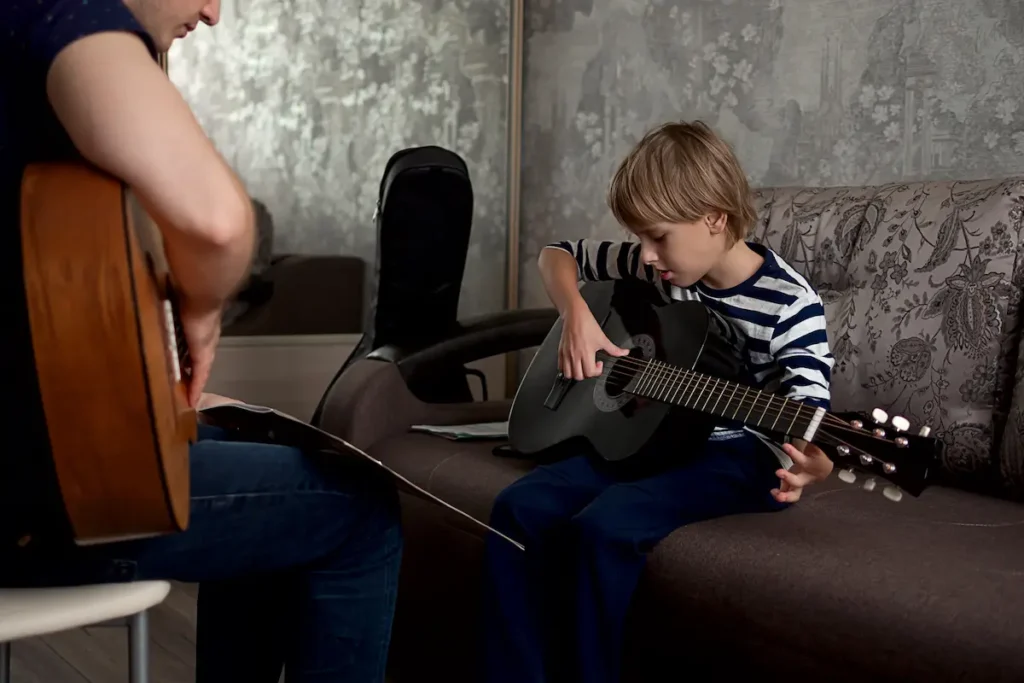
Children who play instruments develop a capacity for emotional expression that goes beyond words. Music gives them a way to process and communicate experience that is particularly valuable during the more turbulent years of adolescence. schools with a rich musical culture like St Catherine’s, Bramley understand that a rich musical culture in a school is not an optional extra but a central part of what makes an education genuinely complete.
The Social Dimension
Ensembles, orchestras, bands, and choirs create communities that cross year groups and social circles. Playing music together is an inherently collaborative activity that builds listening skills, generosity, and a kind of trust in shared endeavour that is genuinely difficult to replicate elsewhere. The friendships made through music often last long after school has ended.
You do not have to be musical yourself to give your child this gift. You simply have to provide the opportunity and hold the line through the early months when perseverance is hardest. The return is worth it. Find out more at https://www.stcatherines.info/.
About the Partner: St Catherine’s, Bramley is an independent day and boarding school in Surrey for girls aged 4 to 18, celebrated for its academic excellence, outstanding music, sport, and the arts, and its genuine commitment to the personal flourishing of every pupil.