
Every child learns in their own unique way. While schools provide structured teaching, children absorb and process information differently depending on their individual strengths, interests and personalities. Understanding your child’s learning style can help you support their development at home, boost their confidence and make learning a more enjoyable experience.
Recognising how your child learns best does not mean placing them into a fixed category. Instead, it allows parents to adapt activities, conversations and learning opportunities so that children feel more engaged and motivated.
What Is a Learning Style?
A learning style simply refers to the way a person prefers to take in and understand new information. Some children learn best by seeing, others by listening, and some by doing.
Many educators group learning styles into three broad categories: visual, auditory and kinaesthetic. Most children use a combination of these approaches, but they often show a natural preference for one.
Observing how your child interacts with the world can offer helpful clues about which methods help them understand new ideas more easily.
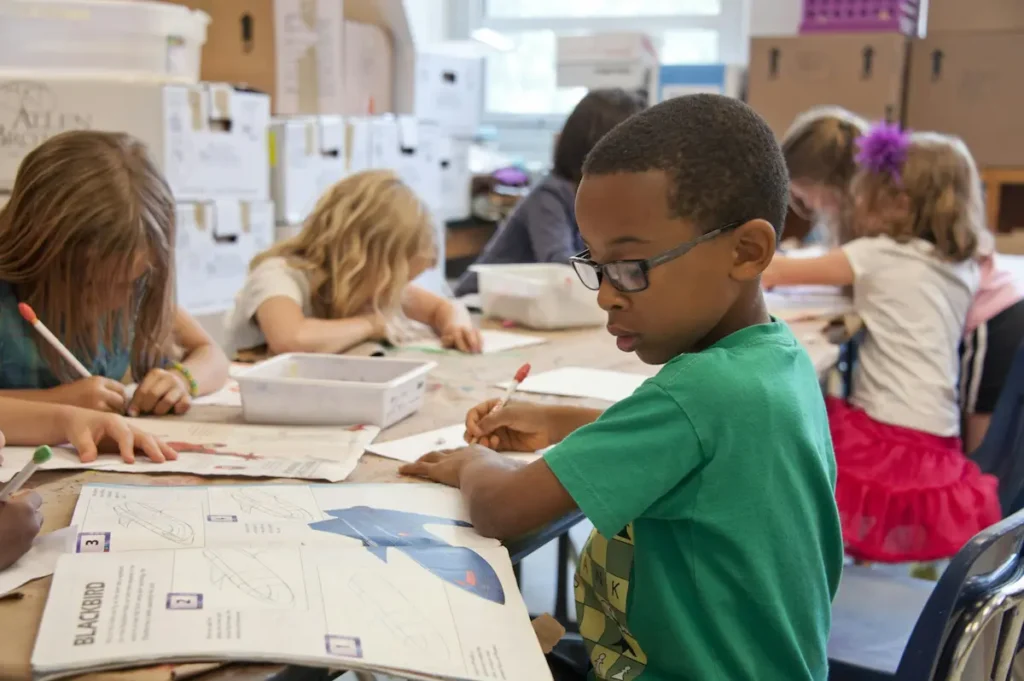
Visual Learners
Visual learners respond strongly to images, diagrams and demonstrations. They tend to enjoy books with pictures, charts, colours and visual explanations.
If your child prefers this style, they may enjoy activities such as drawing, watching demonstrations or using flashcards. Visual learners often benefit from seeing how something works rather than simply hearing instructions.
At home, parents can support visual learners by using colourful notes, diagrams, storyboards or educational videos to explain new concepts.
Auditory Learners
Auditory learners absorb information most effectively through listening and speaking. They often enjoy storytelling, discussions and verbal explanations.
These children may remember things better when they hear them aloud or repeat them in conversation. Reading stories together, discussing ideas or encouraging your child to explain what they have learned can help reinforce understanding.
Music, rhymes and word games can also be powerful tools for auditory learners, helping them retain information in a fun and engaging way.
Kinaesthetic Learners
Kinaesthetic learners prefer a hands-on approach. They learn best by moving, building, experimenting and physically engaging with their environment.
Children with this learning style may struggle to sit still for long periods but thrive during practical activities such as crafts, science experiments, role-play or outdoor exploration.
Parents can support kinaesthetic learners by introducing interactive learning opportunities, such as building models, cooking together or turning lessons into games that involve movement.
Why Learning Styles Matter
Understanding your child’s learning style can help reduce frustration for both parents and children. When information is presented in a way that suits your child, they are more likely to feel capable and motivated.
It can also help you identify situations where your child may need additional support. For example, a kinaesthetic learner may find traditional classroom settings challenging but excel during practical activities.
By recognising these differences, parents can encourage learning in ways that feel natural and enjoyable.
Supporting Your Child’s Learning at Home
The most effective approach is often a balanced one. Encouraging a mix of visual, auditory and hands-on experiences helps children develop a wide range of skills.
Pay attention to what excites your child, how they solve problems and the activities they naturally gravitate towards. These small observations can reveal a great deal about how they learn.
Ultimately, the goal is not to label children, but to create an environment where curiosity, exploration and confidence can flourish. When children feel supported in the way they learn best, they are more likely to develop a lifelong love of learning.